

Customer Feedback Tools: What They Are and How to Get Real Value From Them
Table of Contents:
- What Are Customer Feedback Tools?
- Collecting Feedback vs Understanding It
- The Cost of Poor Feedback Management
- Types of Customer Feedback Tools and How They’re Used
- What Is the Most Immediate Way to Gather Customer Feedback?
- How to Choose the Right Customer Feedback Tool for Your Business
- Turning Feedback into Actionable Insight
- Conclusion: Making Customer Feedback Work Harder for Your Business
What Are Customer Feedback Tools?
Customer feedback tools are systems and methods that allow businesses to collect, analyse and act on customer insights. By capturing feedback at key moments across the customer journey, these tools enable organisations to understand customer needs and expectations. This helps reveal patterns in behaviour and sentiment, as well as identifying specific pain points.
While a common misconception is that customer feedback tools involve only surveys, they can, in fact, take many forms. Other feedback methods include review platforms, live feedback prompts, social listening, mystery shopping and voice of the customer programmes.
When talking about customer feedback, terminology is often used interchangeably. To avoid confusion, here is a brief summary of terms:
Customer feedback tools – specific methods that focus on the collection of customer feedback, for analysis or review, e.g. a survey
Customer feedback software – technology that enables businesses to collect, analyse and act on feedback from customers – such as survey platforms or review management systems.
Customer feedback management tool – a broader, centralised platform that systemises the feedback loop in its entirety, from collection to action.

Why Businesses Struggle to Get Real Value from Customer Feedback
Collecting Feedback vs Understanding It
Many organisations invest heavily in customer feedback tools to collect large volumes of data. However, they often struggle to turn this feedback into meaningful improvements. Some of the common reasons for this are:
Feedback overload – when teams are overwhelmed with data but lack the time, structure or clarity to identify what’s important in order to prioritise and implement change.
Data without context – while a low score might highlight dissatisfaction, solutions can only be successful if there is an understanding of where and why the dissatisfaction occurred. When feedback is captured in isolation, identifying – and therefore addressing – the root cause can prove difficult.
Siloed insights – where an issue is highlighted, it’s important for this to be understood across teams. For example, feedback may sit within marketing or customer service, but the action to address it may sit with a completely separate team. Without alignment and shared ownership, insights can fail to translate into coordinated action.
Customer feedback tools alone do not improve customer experience. Real value comes from effective customer feedback management – connecting insight to decision-making and closing the loop with customers. It is only when the customer feedback loop is closed that feedback becomes actionable, enabling real improvements to the customer journey.
The Cost of Poor Feedback Management
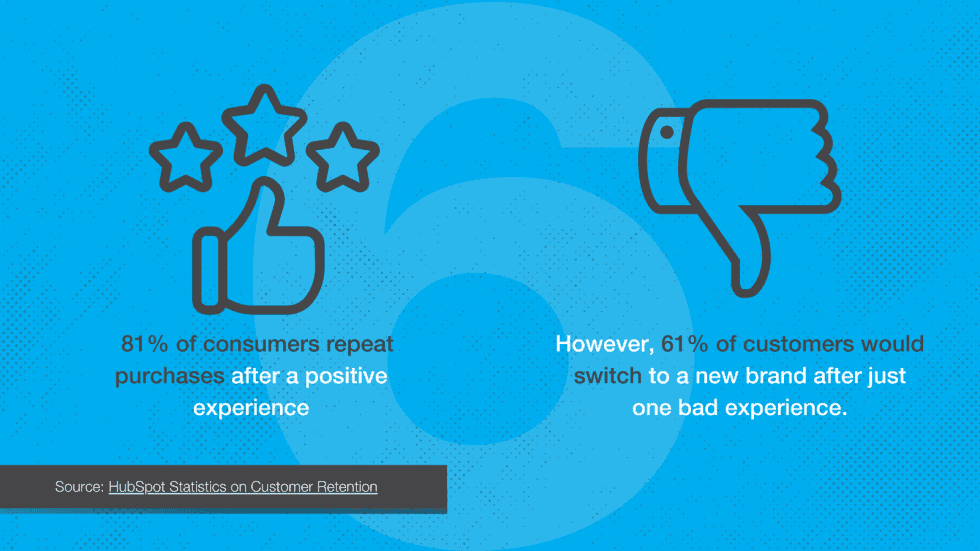
When organisations lack effective customer feedback management, opportunities to make a difference can easily be missed. Mismanaging or ignoring feedback can have direct implications, negatively affecting business performance.
Poor feedback practices often lead to:
Increased customer churn – where customers have taken the time to share concerns but see no acknowledgement or improvement, trust can quickly erode, and loyalty is lost.
Missed revenue opportunities – unresolved issues can block repeat purchases, upsell potential and positive word of mouth.
Frustrated frontline teams – mismanagement of feedback doesn’t just have an external impact. If employees repeatedly hear the same complaints but are ill-equipped to drive change, this can impact morale, service quality, and retention.
By effectively managing customer feedback and using customer feedback software, organisations can implement meaningful improvements. This, in turn, protects revenue, strengthens brand loyalty and empowers teams.
Types of Customer Feedback Tools and How They’re Used
Customer feedback tools broadly fall into two categories: quantitative and qualitative, and real-time feedback tools. Each plays a different role in understanding the customer experience, from measuring performance at scale to uncovering deeper insight in the moment. Let’s examine these in further detail.
Quantitative Feedback Tools
Quantitative feedback tools are designed to collect structured, measurable data at scale. They largely help organisations track performance over time and identify wider trends in customer sentiment.
Common examples include surveys, star ratings, Net Promoter Score (NPS) and Customer Satisfaction (CSAT) measures. These tools are typically delivered through customer feedback software and are easy to implement across a range of touchpoints, from digital and in-store to service interactions.
Quantitative tools are effective for benchmarking, trend analysis, and performance monitoring at key moments. They provide clear metrics that can be used to set targets, compare teams or locations, and track improvement over time.
On the flipside, quantitative tools often lack context. While they clearly show what is happening, they rarely explain why. If overused, it can also create fatigue. When this happens, customer response rates are likely to decrease, and the information conveyed is likely to lack detail.
Qualitative and Real-Time Feedback Tools
Qualitative, real-time customer feedback tools provide context for the scores. These tools capture what customers are actually saying in their own words and can effectively reveal the root causes of dissatisfaction.
These tools take the form of open feedback, comments, frontline insight and real-time feedback mechanisms, such as in-journey prompts, QR codes or instant post-interaction questions. These allow organisations to capture feedback while the experience is still fresh and can provide in-depth insight into customer sentiment.
For qualitative customer feedback to accurately reflect the customer journey, context, and timing are vital. Capturing feedback at the point of experience highlights stress points as they happen. This provides more accurate data and, when managed in a timely way, more actionable insights.
Effective customer feedback management tools can help organise, analyse, and prioritise insights, ensuring they reach the relevant teams quickly. While both types od tool offer individual merits, their real value comes when combined. This creates a deeper understanding and supports more informed decision-making.
What Is the Most Immediate Way to Gather Customer Feedback?
The most immediate way to gather customer feedback is by collecting it at the point of experience. Real-time feedback tools, such as instant insight, allow organisations to capture customer and employee views in real time. This provides honest reactions and actionable data that help organisations respond quickly to improve service.
Low-friction feedback approaches, such as in-app messages and post-interaction rating requests, reduce customer effort while still highlighting where experiences succeed or fail. One drawback is that, due to its rapid nature, it typically provides less depth than longer surveys or interviews. However, there’s no doubting that real-time feedback delivers speed and relevance.
Speed of insight enables organisations to stay up to date with what’s happening and how their customers are feeling, tracking shifts in sentiment and avoiding escalations. This is particularly important in fast-moving environments, as it enables quicker decision-making and more responsive service improvements.
How to Choose the Right Customer Feedback Tool for Your Business
When choosing the right customer feedback tool for your business, it’s important to consider how the feedback harnessed will be used to drive decisions and improvements.
Here’s a practical guide to selecting the right tool for you:
1. Define what decisions the feedback needs to inform
Start by identifying the business questions you need feedback to answer. For example, where are customers experiencing friction? Or “what is it that’s causing customers to leave?” The right tool should provide insight that directly informs these questions.
2. Decide who needs access to insights
For feedback to be valuable and useful, organisations need to ensure it’s visible across teams. From frontline staff to senior management, consider which teams need visibility and how insights will be accessed through customer feedback management tools.
3. Balance speed, depth, and actionability
The right customer feedback software balances all of these, combining real-time signals with richer context to support meaningful action.
Turning Feedback into Actionable Insight
We’ve looked at how to select the right customer feedback, but the question remains: how does feedback translate into action?
Insight only becomes valuable when it drives meaningful change. To start with, feedback must be visible, with insights shared across teams to ensure alignment, accountability, and a shared vision. When insight is shared openly, patterns emerge, and responsibility for improvement becomes collective rather than siloed.
Closing the feedback loop is equally important. If customers are taking the time to provide feedback, they expect acknowledgement and reassurance that their voice has sparked improvement. Simple follow-ups and communicating positive change grow trust and strengthen engagement.
To be fully effective, insight should be applied to longer-term strategy – not just “of-the-moment” fixes. This means applying insights to improve processes and training, and to ensure continuous improvement.
At Insight6, our philosophy centres on measurable, actionable improvements in Customer Experience (CX). Discover how we helped Longleat and Cheddar Gorge build a feedback-first culture – aligning teams, highlighting successes and taking focused action where it mattered most.

Conclusion: Making Customer Feedback Work Harder for Your Business
Customer feedback tools are much more than just surveys – they are the means to understand what customers think, feel and need. Yet many organisations struggle to get real value from feedback, collecting data without context, becoming overwhelmed by volume, or simply failing to act.
Utilising effective customer feedback management tools enables organisations to analyse feedback, share insight across teams and take meaningful action.
Choosing the right tools starts with understanding what decisions feedback needs to inform, who will use the insight, and how speed, depth and actionability are balanced. Once selected, success depends on embedding feedback into daily operations, closing the loop with customers, and using insight to guide training, processes and strategy.
With the right approach, customer feedback tools can drive measurable improvements, empower teams, strengthen brand loyalty and protect revenue.
If you’re looking to improve how feedback informs decisions across your organisation, book a free consultation with your local insight6 director, or call +44 (0)800 970 8987.
Like what you’ve read? Sign up for the insight6 newsletter to stay ahead of the competition with the latest insights and strategies to enhance your customer experience.

0 Comments